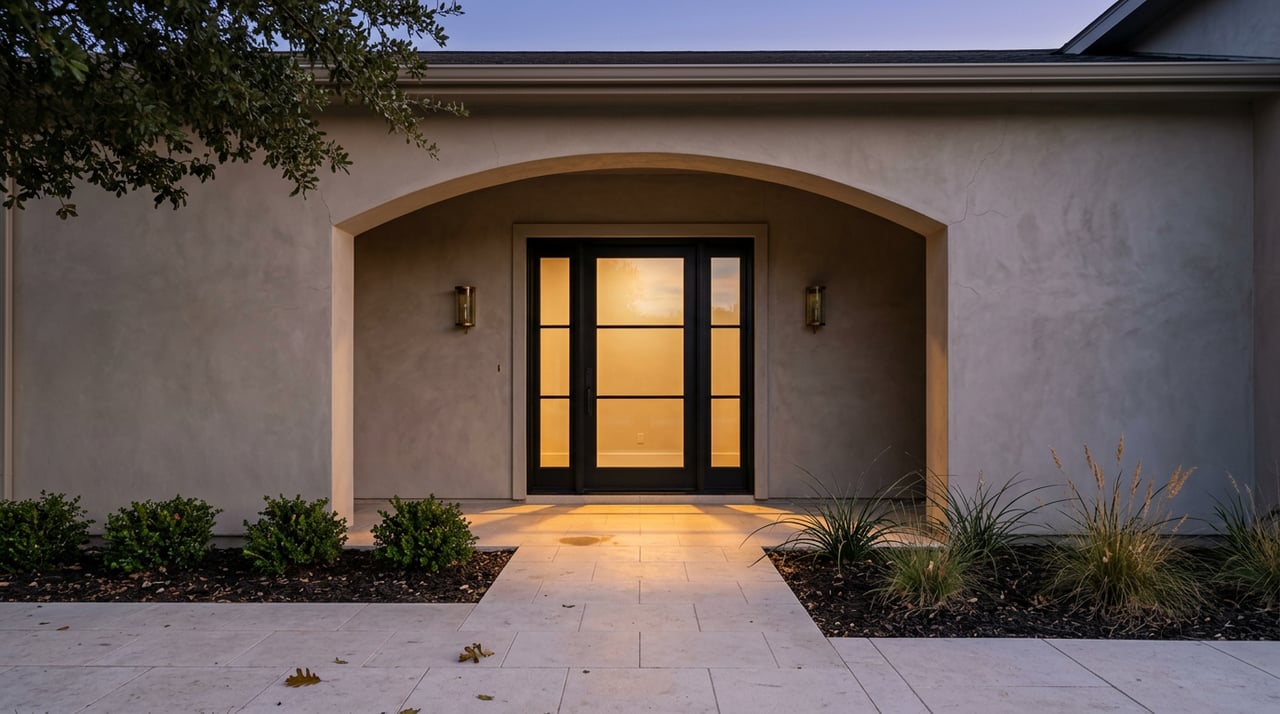
Argyle New Construction Homes and MUD/PID Tax Costs
September 3, 2026
September 3, 2026
Picture two buyers closing on $650,000 homes in Argyle this month. Same square footage, same builder-grade finishes, same Argyle ISD boundary on the flyer. One family's monthly payment includes roughly $921 in property taxes. The other's includes roughly $1,376. Neither buyer overpaid for the house. The gap has nothing to do with upgrades or lot size and everything to do with a taxing district neither one noticed on the plat map, and whether the boundary lines drawn around that district have shifted in the past two years.
That's the story running underneath Argyle's new construction right now. It isn't the sticker price. It's the fine print that shows up after the price is already agreed to, and in a few of Argyle's newest communities, that fine print has been rewritten more than once recently.
Texas law treats special district taxes as a disclosure issue, not a footnote. Under Chapter 49 of the Texas Water Code, a seller in a Municipal Utility District has to give the buyer a written notice covering the tax rate, bonded debt, and any standby fees of that district before the buyer signs a contract, or as an addendum at the moment the contract is signed. Miss that window, and the buyer's right to terminate doesn't expire at option period. It survives all the way to closing. The Texas Real Estate Research Center has spent the better part of a year reminding agents that a late notice, delivered any time before closing, only protects the seller if the buyer knowingly closes anyway.
Public Improvement Districts carry a parallel but separate requirement under the Local Government Code, and buyers sometimes assume one disclosure covers both. It doesn't. A property inside both a MUD and a PID, which describes a fair number of Argyle's newer sections, needs two distinct notices. TREC's own guidance on the standardized MUD notice form makes clear this isn't a formality a listing agent can wave off. It's the difference between a binding contract and one the buyer can walk away from at will.
The dollar gap between Argyle's older, MUD-free acreage and its master-planned communities is not small, and it doesn't show up until someone runs the math on a specific address.
| Location | Effective tax rate | Annual tax on $650,000 | Monthly impact |
|---|---|---|---|
| Argyle proper (no MUD or PID) | about 1.70% | about $11,050 | about $921 |
| Canyon Falls (MUD plus water control district) | about 2.54% | about $16,510 | about $1,376 |
That's roughly $455 a month, or about $5,460 a year, separating two buyers who might be looking at the same builder's floor plan a few miles apart. It's real money in a mortgage qualification calculation, and it's the kind of number a lender bakes into escrow whether or not the buyer noticed it during the walkthrough.
Harvest, the other large master-planned community along the Argyle-Northlake line, has carried its own version of this math, and it hasn't sat still. Its district structure changed less than two years ago, which is exactly why the number on any given listing needs to be checked rather than assumed.
The rate itself isn't fixed forever, but it doesn't move the way people assume. MUD taxes generally decline as a district matures and its infrastructure bonds get paid down, which can take twenty to thirty years. Homeowners can't prepay a MUD tax individually because it's tied to district-wide bond debt, not a lien against one property. A PID assessment works differently. Because it's often a fixed lien against the specific parcel, a homeowner with the cash can pay it off and have that line item disappear from future tax bills entirely.
Here's what makes this more than a static comparison table: the boundaries and tax structures around Argyle's newest growth areas have changed twice in the past two years, and buyers who closed before those changes are living under different terms than buyers closing now.
The Harvest development, built by Hillwood along the Argyle-Northlake line, originally carried both a MUD and a Public Improvement District, with the PID assessment set at $0.21 per $100 of assessed value to fund landscaping and shared amenities. That PID no longer exists. The Town of Northlake's council dissolved the Harvest PID at its October 10, 2024 meeting, removing that specific line item from bills going forward.
Then, in the November 4, 2025 election, Argyle voters took a second swing at how Harvest gets taxed, this time on the sales tax side. The vote raised the sales tax rate inside Harvest's commercial district to match the rest of town, shifting a portion of the town's revenue base away from property taxes and toward retail spending. Mayor Ronald Schmidt framed it as more than a technical fix:
"This along with other efforts is shifting the tax burden from property taxes to sales tax revenue. We continue to see sales tax revenues increase with October's 11% increase over same time last year."
That's a mayor on record describing an active strategy to rebalance how a fast-growing area pays for itself. For a buyer, it means the effective tax rate quoted on a listing today reflects a governance structure that local officials are still actively adjusting, not a number set in stone at the community's founding.
There's a second wrinkle worth knowing if you're looking at the very first homes to close in a brand new phase. MUD rates in partially built-out districts commonly run higher, sometimes $1.20 to $1.50 per $100 of assessed value, compared to $0.35 to $0.50 once a district matures. The reason is arithmetic: if a developer plans 2,000 lots and only 400 have closed, those 400 early buyers are carrying the full weight of the district's bond debt until more rooftops arrive to share it. Buying into the first phase of a new Argyle-area community can mean paying the highest rate that community will ever have.
Argyle's growth corridor is producing developments that don't sit neatly inside one jurisdiction, and the newest example is worth watching even if it's still in presale. Furst Ranch, a 2,300-acre project at Highway 377 and FM 1171, began its first home sales in January 2026 with Highland Homes, followed by Coventry Homes, David Weekley, Toll Brothers, and several other builders. Argyle ISD purchased roughly 35 acres inside the development in December 2024 for a future elementary and middle school, and the project is marketed primarily as a Flower Mound community, though some builder addresses reference Argyle and the 76226 ZIP code.
That ZIP code and school district affiliation don't settle the question of which municipal or special district actually governs a given lot. Buyers considering any home in that corridor, or in similarly ambiguous stretches of Argyle's edges, need to confirm the actual taxing entities parcel by parcel rather than relying on the marketing name of the community.
A few minutes of homework before the option period starts can save a genuine surprise at the escrow review:
Can I negotiate a MUD or PID rate down before closing? No. These are district-wide obligations that apply uniformly to every property inside the boundary. The only lever that changes your bill is protesting the appraised value with the county, which lowers the dollar amount even if the rate itself stays the same.
Does my homestead exemption lower my MUD tax? Generally no. A homestead exemption reduces school district and some city and county taxes, but MUDs are independent taxing entities and typically don't extend homestead exemptions on their own.
If I'm comparing two Argyle communities, which number should I ask for first? Ask for the total effective tax rate, not the base city or county rate. That single figure folds in the MUD, PID, school, and county pieces and is the only number that tells you what you'll actually owe.
If you're weighing a home in Harvest against one in Canyon Falls or an older acreage lot in Argyle proper, the tax structure is often the difference that decides affordability before the floor plan does. The Monarch Team walks Argyle buyers through the actual taxing entities on a specific parcel before an offer goes in, not after. Reach out for a free home consultation and we'll pull the numbers on the address you're considering.
Stay up to date on the latest real estate trends.
When you work with The Monarch Team, you gain a dedicated group of professionals who listen carefully, communicate clearly, and advocate wholeheartedly for your goals. Whether you’re ready now or planning ahead, we’re here to guide you every step of the way.